
Choosing a new career path means weighing more than just personal interest—you want real assurance that the field will still need workers in five or ten years. Beauty and wellness services are often dismissed as unstable, yet the data and daily realities of the industry tell a different story. If you are considering this line of work, understanding the specific indicators of long-term demand can help you decide whether it is worth the investment of time and money. Below are the key signs that point toward lasting opportunity in this profession.
Rising Demand for Personal Care Services
People are spending more on personal upkeep than they did a decade ago, and that trend shows no sign of reversing. Self-care has shifted from an occasional luxury to a regular habit for many consumers, which translates into steady appointment bookings for skincare professionals. Spas, salons, and wellness centers report consistent client traffic even during economic slowdowns, since skincare is often viewed as an affordable indulgence compared to other luxury purchases. This pattern of resilient spending is one of the clearest early signs that the field offers staying power.
Government labor statistics have tracked steady job growth projections for skincare specialists over the coming decade, often outpacing average growth rates for all occupations. This isn’t a niche or shrinking category—it’s an expanding one, fueled by population growth, aging demographics, and rising awareness of skin health. When an entire sector shows upward momentum in official employment data, it signals a more dependable career runway for newcomers.
Variety of Work Settings Available
One sign of a resilient career is the sheer number of places you could end up working, and this field offers unusual flexibility in that regard. Graduates aren’t limited to a single type of employer, which spreads out risk and opens doors in almost any community, urban or rural. This variety also means you can pivot between settings as your interests or life circumstances change without starting over in a new field entirely.
- Day spas and medical spas offering facials, peels, and skin treatments
- Dermatology or plastic surgery offices needing pre- and post-procedure skincare support
- Hotels and resorts with on-site wellness centers
- Cruise ships offering spa services to travelers
- Freelance or mobile services for clients who prefer in-home appointments
Opportunities to Specialize and Increase Earnings
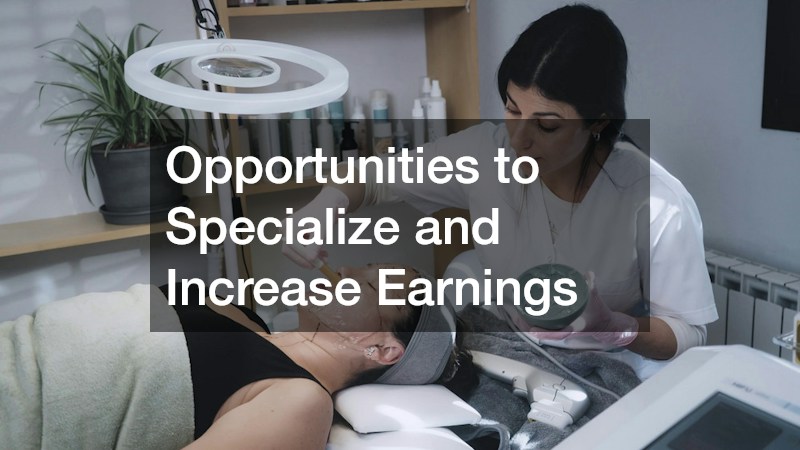
Entry-level positions are just the starting point in this field, and many professionals find that specialization is where the real income growth happens. Focusing on a specific technique or treatment type, such as chemical peels, microdermabrasion, or lash extensions, allows practitioners to charge premium rates and attract a loyal client base. Specialization also makes a resume stand out to higher-end employers who are willing to pay more for niche expertise.
Completing formal esthetician training is often the first step toward unlocking these advanced certifications, since most specialty courses require a base-level license before enrollment. This layered approach to education means your earning potential can keep climbing years after you finish your initial coursework. Many practitioners treat their first year or two as a foundation-building period, then reinvest in additional certifications once they identify which services clients request most.
Portability of Skills Across Locations
A career that ties you to one city or state can feel limiting, but licensed skincare professionals generally have an easier time relocating than workers in many other trades. The fundamentals—facials, waxing, chemical peels, extractions—are taught in nearly identical form across accredited programs nationwide, which means your hands-on abilities travel with you even when paperwork doesn’t automatically follow. Licensing requirements do vary between states, so it’s worth checking reciprocity rules before a move.
Some states have formal reciprocity agreements that let you transfer a license with minimal hassle, while others require you to retake the state board exam, complete additional hours, or submit proof of a certain number of training hours that meets their specific threshold. A quick call to the new state’s cosmetology or esthetics board before you move can save weeks of downtime. This portability matters if you anticipate moving for a partner’s job, family needs, or simply a change of scenery. It also opens the door to seasonal or travel-based work, since spas in resort towns and cruise lines often seek estheticians willing to relocate temporarily.
For anyone who values flexibility as much as job security, that combination of a transferable skill set and a built-in backup plan is a genuine career advantage.
- Many states offer reciprocity agreements that reduce retesting requirements, though estheticians should still confirm hour requirements, since some states mandate 600 hours while others require 1,000 or more
- Skills like facials, waxing, and skin analysis are in demand nationwide, making it easier to find work in spas, salons, dermatology offices, or resorts regardless of region
- Remote consultation and product recommendation work has grown alongside e-commerce beauty brands, opening virtual roles in skincare coaching, brand ambassadorships, and online customer support
- Military spouses and relocating professionals often find this field easier to re-establish in than more regionally regulated careers like nursing or teaching
- Building a portfolio and client testimonials online can also help professionals transfer credibility to a new market faster than starting from scratch
Low Barrier to Entry Compared to Other Licensed Trades
Many rewarding careers require years of schooling and substantial debt before the first paycheck arrives, but this is not one of them. Programs typically run several months to about a year, depending on the state, making it realistic for career changers or recent graduates to start earning sooner. Lower upfront costs also mean less financial risk if you later decide to specialize further or shift into a related role like sales, education, or product development within the beauty industry.
This accessibility doesn’t mean the training is easy or superficial. Students still cover anatomy, sanitation, chemistry basics, and hands-on technique before sitting for a licensing exam, ensuring graduates enter the workforce genuinely prepared. The combination of manageable program length and rigorous content is part of why this path continues to attract steady enrollment numbers year after year.
Strong Client Retention and Repeat Business Patterns
Unlike one-time purchases, skincare services tend to generate repeat visits, since most treatments require maintenance every few weeks to remain effective. This creates a built-in incentive for clients to return, which translates into more predictable income for practitioners once they establish a regular clientele. Building this kind of repeat business takes time, but industry veterans consistently point to client retention as one of the strongest indicators that a person has found sustainable footing in the field.
- Facial treatments often require follow-up visits every four to six weeks
- Loyalty programs and membership models are increasingly common in spas
- Referral business from satisfied repeat clients reduces reliance on new client acquisition
- Long-term client relationships can lead to stable, predictable monthly income
Conclusion
Taken together, these signs paint a picture of a career path with genuine room to grow, not just a passing trend. If steady demand, flexible work settings, and opportunities to specialize sound appealing, it’s worth researching accredited programs in your area and talking to licensed professionals about their day-to-day experience. Reach out to a local school or current practitioner to ask questions before enrolling, so you can start this path with realistic expectations and a clear plan.